

But Why the Cat?
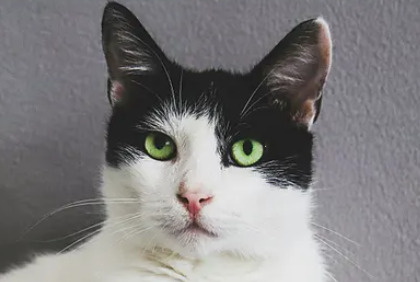
Photo by Manja Vitolic on Unsplash
Let’s imagine a commission has been struck to solve a particular social problem. Three progressive thinkers are working alongside one psychopath. The commission’s recommendations will likely be implemented. How are things going to play out?
To start this discussion, I’m going to refer you to a recent article by Benjamin Cain:
The Reign of Civilized Psychopaths
My apologies. This link probably won't work unless you are a member of Medium
If you don’t read Mr. Cain’s article, then I shall pull out its most prominent paragraph that summarizes why my and Mr. Cain’s articles are so connected:
The upshot of Trump’s authoritarian, nakedly unpresidential presidency is that subcriminal psychopathy is a superpower in politics and business. I’m speaking here not about a debilitating disorder but the lack of empathy you find in Machiavellian occupations, a lack that enables the unscrupulous few to excel at the expense of those who are hampered by their scruples.
Meet Harold, My Favorite Psychopath
I got Harold as a kitten, and he fit nicely into my hand. I think he was weaned one week too early. The photo is not Harold, but a cat that looked similar to Harold: tuxedo style with a mostly white face.
We bonded a lot on that first day. He clung to me all day. I showed him the cat food, the water dish, and the litter box. No training required. I prepared a cat basket with soft blankets to sleep on. I took pride in being such a good cat dad.
Bedtime. I put Harold into his basket. I climbed into bed. Harold, with his little kitten claws, climbed the sides of my mattress and found his way under my covers. He cuddled up to my feet. That was the way it was going to be. I wasted $10 on a cat basket.
Harold grew up to be a big cat and had a curiosity for the outdoors. Rather than be his doorman, I put a catdoor in a basement window. Harold had unfettered access to the outside. He came and went as he pleased.
While trying to fall asleep one night, I heard Harold come in. I was expecting him to be in my bed soon. Rather I got some strange noises in my basement. Bang-bang-bang . . . silence . . . bang-bang-bang . . . silence . . . bang-bang-bang . . .
I had to check. I went to the basement. Harold had caught a mouse. The mouse was still alive. Harold would release the mouse. The mouse would try to run away. Harold would catch him again. Repeat, repeat, repeat.
I have seen cats playing with live mice, and this could go on for another hour or two. I needed some sleep. So I trapped the mouse in a container and put it outside. I suspected it was too injured to recover, but now I could sleep. Harold gave me a dirty cat look.
In terms of the cat-and-mouse relationship, Harold was a pure psychopath. He had no empathy for the fear and injuries the mouse had. The mouse was something for Harold to play with; that’s it.
Well, we could argue that torturing mice is what cats do. But hold on to this image of Harold pouncing on a mouse which he had already captured.
My Understanding of Psychopathy
Over the years, I have read a few things about psychopathy. Here is my summary:
1) Psychopathy is a condition where a person has little empathy for the people around him.
2) This trait is mostly genetic. Psychopaths do not recover from this condition.
3) Depending on the various theories, about one to four percent of men could be considered psychopaths. Women have a lower occurrence.
4) There is likely a grey area between psychopathy and the usual human empathy. I might be in that grey area.
5) Psychopaths can still be trained to participate in society — if the right family and community connections are made in early life. Even if this nurturing is provided, psychopaths are more motivated by not going to prison than by actual empathy.
6) If they are trained in fake empathy, they will still take their psychopathy to the edge of not going to prison. Like Harold and his captured mouse, psychopaths enjoy subjugating the people around them. Make them uncomfortable. Put them on edge. Make them squirm. Show them who has the power.
As Mr. Cain’s essay suggests, psychopaths do find business and politics as a place where they can get away with their psychopathic tendencies.
While psychopaths succeed in “key performance indicators,” their main motivation is to be in a position where they control others. Even a big paycheck is secondary to how they get their dopamine, serotonin, and other brain chemicals flowing.
Psychopaths can play the long game. They can mask their true nature to build a supervisory position. When they get that supervisory position, they can still keep the empathy mask mostly on — but they are still mostly motivated by the power they hold over other people. This constant planning and plotting are the main reasons for psychopaths to wake up and go to work each day.
Think about Harold and his captured mouse.
My Experience in Politics
I was an active worker in a Canadian political party for six years. I suspect a few of my political colleagues could have been diagnosed as psychopaths. And I suspect they would diagnose me in a similar manner. But I am not trained to make this diagnosis. But here is what I do know:
Politics does have more than the average numbers of psychopaths in it. This profession is too attractive to psychopaths, at least the ones who don’t want to go to prison. The main key performance indicator is to win elections, not pass a psychological test. Win the election, the political party will usually overlook many of the flaws, including psychopathy.
If not a true psychopath, many political players are probably in a grey area like me. The cut-and-thrust of internal party politics is kind of fun, especially if my side is winning. I got a buzz when I used Robert’s Rules of Order to shut up a few people with their stupid ideas.
Psychopaths like these battles. They will happily take on both normal people and other psychopaths to win those higher positions in political parties. Politics is fun for them!
Sometimes, psychopaths need to be defeated. A good way to defeat a psychopath in a power struggle is to become like a psychopath, working the unofficial angles and alliances to push an opponent to the sidelines. The merits around issues are not that important.
Let me say this in different words. While it is hard to measure the number of true psychopaths and quasi-psychopaths in politics, many political players have adopted psychopathic techniques to succeed in this competitive field.
Many political people have read The Prince by Machiavelli. This 16th century best seller is a cookbook for psychopaths to succeed. Just reading this book does not make someone a psychopath; but it still influences ambitious people to behave more like a psychopath.
And politics also has its fair share of Dunning-Kruger types, the people who are experts at everything — and everyone else with different ideas is stupid. To many observers, this too seems like psychopathic behavior.
In other words, civilized psychopathic behavior is normalized in politics.
Many normal people will not serve in a political capacity because is hard for them to be around all this psychopathy. Especially as a volunteer. There were times I wondered why I was still in politics.
Society loses many capable people because politics is so rough.
When good people stay away, this then gives psychopaths freer rein to be in politics.
Let’s just assume that successful political psychopaths do not want to open up the competition to more normal people.
Back to the title
I have talked about cats, psychology, and politics. My apologies to my lukewarm readers for delaying the call of “Three Progressives vs. One Psychopath.”
Let’s say our city is setting up a commission to advise our police force on how to handle how the police conduct a criminal takedown. We all know we should not make it easy for a criminal to escape arrest. Such a citizen will learn to escape accountability by verbal or physical resistance or just running away. So some force is necessary. But the police should not inflict more-than-necessary force. Rules have already been written. The commission is to investigate how the police force is using those rules. Maybe more training is required. Maybe new rules need to be written. Maybe some officers need to get fired. Maybe some managers need to get fired.
The City Council has appointed four upstanding citizens to this commission. All four have served on previous commissions and have a good reputation.
One is a psychopath — and has masked his tendencies quite well.
Like a football coach watching the replays of his next opponents’ last game, the psychopath analyzes his three colleagues. He realizes that he is unlikely to be in the majority position on this commission’s findings. So he sets up a plan to inflict his version of what the final recommendation should be.
He figures out which of his three colleagues is closest to him, ideologically speaking. He sets up a little friendship and alliance with that person. They meet before the real meeting and discuss ways to disrupt the input of the other two. They build their talking points and get quick rebuttals ready. The psychopath is already getting his addictive brain chemicals flowing.
In the real meeting, the two unallied members are consistently shot down. They see their knowledge, experience, and wisdom easily being refuted. They do not have enough common ground to stand up for themselves. They see their insights not going anywhere. They don’t like being in the commission meetings anymore.
One member resigns. He cites “other commitments.”
Then the other is left to oppose the other two. But one-against-two — we know where that goes. That member resigns as well.
So the Council appoints two new members. Being new to the commission, they are somewhat bewildered as to their new position. The psychopath, being the senior member, befriends the new members. He can exert some influence. He convinces them to turn on the member of his first alliance. Three against one. That member too resigns.
A new member is appointed, and the three new members look to the psychopath for leadership.
Do you understand what has happened?
The psychopath did nothing illegal or outright dysfunctional. He was always civil with the three members who resigned. Many political junkies would argue that his jostling for more influence is normal in politics.
Is this influence what the psychopath wanted? In my opinion, it is secondary in his internal modus operandi. A distant second. Rather he more enjoys playing and winning his domination game.
The psychopath had concocted a plan: a plan that would take time and timing to realize. He played the City Council to get that position. He pushed aside or hookwinked commission members to get that influence. He played to become the dominant person on this commission. The leader of the other three.
Yes, he got his ideas implemented. But his real victory was how well he played his game. There was no accident or coincidence that he got to use his recommendation as the commission’s recommendation. He will look fondly at this accomplishment. He will use this success to earn similar appointments. He is building his reputation to be an electable politician later. His role on this commission will look good on his political resume. That too is part of his bigger plan to dominate even more people.
Let me say this again in simpler terms. Psychopaths enjoy playing and winning to be the dominant player. Their actual opinions are secondary to their motivation.
And most people around the commission will have no clue what happened. Even the three members who resigned probably do not realize they had been played to resign.
And let me say this again in simpler terms. By allowing psychopaths into politics, we are keeping many good people away.
Did you notice that the essay did not talk much about police takedowns? After all, the game is more important than the issues.
Conclusion
We need to get more psychopaths out of government. They are creating a political culture that is not good at solving problems. I have a solution for that.
In the longer term, we need to identify and modify psychopathic behaviors more than we are now. I believe these people can be less disruptive. While we should not expect a cure, we should establish clear boundaries of what is acceptable behavior in public service.
The second time Harold brought a mouse into my house, I “saved” the mouse by capturing it with a container and releasing it back to the outside. I got another dirty look. Harold never brought another mouse inside.
So Harold was trainable to some extent. But did he give up hunting mice? He was a cat.
Did he give up torturing the mice he caught? I suspect he played with his captives outside, away from my eyes. He was a cat. A smart cat. A smart psychopathic cat.
Published on Medium 2026
The Democratic Party Cannot Save the USA
TDG Leaders Making TDG Decisions
